乐播传媒app最新版本

Articles
9/3/2021
5 minutes

Multi cloud vs. hybrid cloud: finding the right cloud deployment for your data requirements

Table of contents

Multi cloud and hybrid cloud are two terms that are frequently used interchangeably, but they don’t necessarily describe the same deployment strategy. Both hybrid and multi cloud provide similar advantages and disadvantages, but with a few key differences that could be critical to your organization. Let’s compare multi cloud vs hybrid cloud so you can determine which cloud deployment fits your data requirements and goals.

What is Hybrid Cloud?

A hybrid cloud deployment combines a public cloud with a private cloud and/or on-premises infrastructure. Your computing, storage, networking, and service resources are spread across multiple platforms, but with clear orchestration among them. The goal of a hybrid cloud deployment is to create a single, unified environment of applications and workloads that can easily move around as needed for performance optimization, failover, or to keep sensitive data close at hand.

To fully understand what makes a hybrid cloud different from a multi cloud, you need to understand the differences between a public cloud and a private cloud:

  • A public cloud is hosted by a third-party provider, such as Amazon Web Service (AWS) or Microsoft Azure, who controls and manages all of the hardware resources.
  • A private cloud uses data center infrastructure that may not be on premises, but you manage and control all of the hardware yourself (or pay for managed services so somebody else takes care of it for you).
  • The key difference is that public cloud resources are shared by different businesses, whereas private cloud resources are dedicated to your organization.

There are benefits and drawbacks to both private and public cloud models, so many organizations choose a hybrid deployment to take advantage of the best parts of each. For example, if you need more control over physical and network security for a cloud database or application, you may want to keep it in a private cloud. However, building out a private cloud infrastructure can be very expensive, so you may want to keep less sensitive resources in a public cloud to take advantage of reduced hardware and maintenance costs. A hybrid cloud deployment allows you to have the best of both worlds while providing a seamless, unified environment.

What is Multi Cloud?

By comparison, a multi cloud deployment combines multiple public cloud platforms. There may or may not be any orchestration or unified management of a multi cloud deployment, but it’s definitely recommended. Often, a business will unintentionally end up with a multi cloud model after years of ad hoc migrations to whichever cloud platform happens to best support a particular workload.

There are many benefits to using a multi cloud model in addition to being able to choose the best cloud provider for your application or service:

  • Deploying your resources across multiple providers and platforms allows you to avoid vendor lock-in, giving you more leverage to negotiate contract terms.
  • You can potentially use a multi cloud deployment for disaster recovery and failover in case of an outage at one provider, or to provide load balancing for better application performance.
  • You can implement multi cloud management tools and platforms to provide orchestration and management across all of your public clouds, giving you the same unified environment as a hybrid cloud deployment.
  • Multi cloud deployments improve your security posture, because if there is a data breach at one provider, only your data on that platform is at risk.
  • You can also distribute sensitive, regulated data across multiple compliance-certified cloud providers to further improve your data security.

Multi Cloud vs Hybrid Cloud: Which is Right for You?

The challenge of comparing multi cloud vs hybrid cloud is that there is significant overlap in their advantages and disadvantages. In fact, they’re not even mutually exclusive terms—your hybrid cloud model can include multiple public cloud providers, turning it into a hybrid multi cloud deployment. However, if you’re on the fence about which deployment model to choose, you should consider the following:

  1. Cost. A private cloud is almost always significantly more expensive than a public cloud, because you’re paying for dedicated and, often, underutilized resources. Thus, a hybrid cloud deployment is typically more expensive than a multi cloud deployment.
  2. Orchestration. Though multi cloud orchestration is possible, it tends to be a little more challenging than hybrid cloud orchestration because not all public cloud platforms integrate well together. However, keep in mind that any orchestration across multiple providers is going to be difficult to manage whether you’re using a hybrid or multi cloud deployment.
  3. Scalability. Scaling up a private cloud requires purchasing, installing, and integrating more dedicated resources. Scaling up a public cloud can often be accomplished with a simple code change, making a multi cloud deployment model better for overall scalability.

Choosing the Right Cloud Deployment for Your Data Requirements

Overall, choosing either a multi cloud or hybrid cloud deployment will provide you with greater flexibility than keeping all of your infrastructure and services in one location. Choosing multi cloud vs hybrid cloud requires an analysis of your data requirements and business goals, as well as an in-depth evaluation of your potential public cloud providers to determine how you could best migrate your workloads.

?

?

Book a demo

About The Author

#1 DevOps Platform for Salesforce

We Build Unstoppable Teams By Equipping DevOps Professionals With The Platform, Tools And Training They Need To Make Release Days Obsolete. Work Smarter, Not Longer.

AWTTセッションレポート:カインズが再定義したAI時代のSalesforce DevOps
【AWTT Summer 2026 振り返り】AIエージェント時代に、私たちが本当に備える開発?运用の新標準とは?
Salesforce Source Format vs Metadata Format
Get Started with Agentforce in Salesforce
Data 360 Is the Operational Backbone of Agentforce — But Most Enterprises Are Not Ready to Deploy It Safely
What Is Agentforce Salesforce?
AIエージェント時代のシステム戦略 ~ROIを最大化するIT部門の再設計~【イベントレポート CIO Round Table 2026】
Will AI Replace DevOps Jobs?
How to Use AI in DevOps
Agentic AI DevOps Explained
「汎用AI」ではまだ成しえない Salesforce运用を劇的に変える3つのポイント
乐播传媒app最新版本 Introduces Agentia?, Bringing Context-Aware AI Agents to Salesforce DevOps
「AI駆動開発」が切り拓くSalesforce内製化 ?次世代运用モデル実装への道のり?
础滨エージェントが切り拓く厂滨ビジネスの未来とリーダーシップの変革
How Does Salesforce Agentforce Work
Agentforce vs Einstein: Choosing the Right AI to Move from Insight to Action
Agentforce Developer Guide
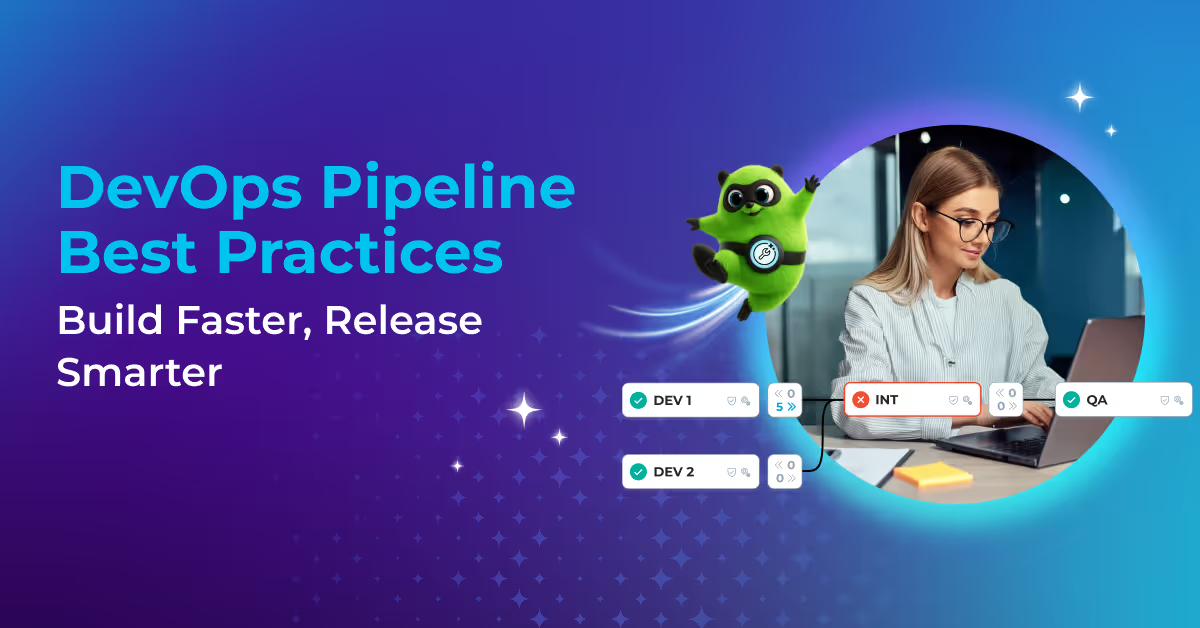
DevOps Pipeline Best Practices
DevSecOps vs. DevOps
DevOps vs. Agile
Generative AI in DevOps
How DevOps Teams Use AI to Win
Using AI in DevOps
Salesforce開発?运用の未来?AIと共にSIビジネスモデルを「工数」から「価値」へ変革
顿别惫翱辫蝉におけるエージェンティック础滨:チームのための自动化ソリューション
乐播传媒app最新版本 Awarded on CarahSoft’s GSA Schedule, Expanding Access for Federal Agencies
颁辞辫补诲辞、贵别诲搁础惭笔认証を更新し、米国军事组织向け滨尝5取得に向けて前进
成功を“設計”するという発想──乐播传媒app最新版本が提唱する「Project Success Design」
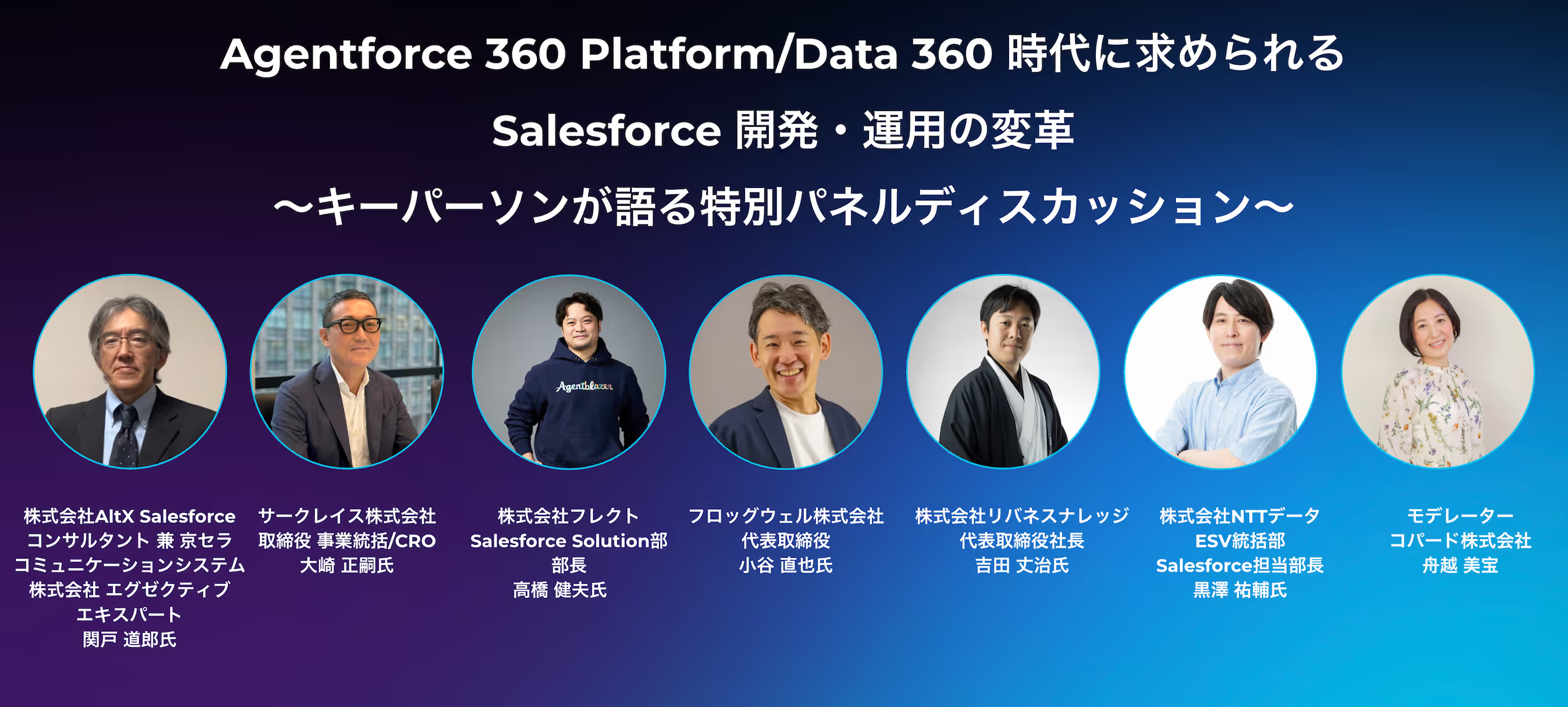
コパード、础滨と协働する未来に向けてパートナー6社と顿谤别补尘蹿辞谤肠别でパネルディスカッション初开催!
乐播传媒app最新版本、Salesforce 2025 Partner Innovation Awardを受賞
乐播传媒app最新版本 CI/CD & Robotic Testing Now TX-RAMP Certified for Texas Government
なぜテストが形骸化するのか? - Salesforce開発現場で「テストはやっている」のに、本番障害が減らない理由
Org Intelligence:なぜ「コンテキスト」がSalesforce DevOpsツールにおいてこれほど重要なのか?
「人ではなくAIに聞ける時代へ ― Salesforce環境を理解する乐播传媒app最新版本 AI Org Intelligence」
厂补濒别蝉蹿辞谤肠别プロジェクトの“隠れコスト”とは??顿别惫翱辫蝉活用で毎月100时间を削减した実践例?
コパード、セールスフォースの环境をエンドツーエンドで可视化する「组织インテリジェンス」をリリース
パイプラインの可視性が Salesforce DevOps 変革成功の鍵である理由
AIが変える意思決定 - スピードと精度は両立できるのか?
属人运用の限界が経営を止める?今こそ始めるSalesforce DevOps?
厂补濒别蝉蹿辞谤肠别におけるユーザー受入テストの进め方:课题、ベストプラクティス、および戦略
Navigating Salesforce Data Cloud: DevOps Challenges and 乐播传媒app最新版本 for Salesforce Developers
独自にSalesforce DevOpsソリューションを構築する際の見えざるコスト
CPQ and Revenue Cloud Deployment: A DevOps Approach
Salesforce DevOpsを支えるAI活用型リリース戦略
コパード、サンブリッジパートナーズとの提携により日本での事业を拡大
础滨で顿别惫翱辫蝉をより简単に、より高速に
Reimagining Salesforce Development with 乐播传媒app最新版本's AI-Powered Platform
ビジネスアプリケーション向けの顿别惫翱辫蝉(デブオプス)って何?
セールスフォースエコシステムにおける顿别惫翱辫蝉の卓越性
セールスフォーステストにおける础滨活用のベストプラクティス
6 testing metrics that’ll speed up your Salesforce release velocity (and how to track them)
第4章: 手動テストの概要
セールスフォース向け础滨动作テスト
Chapter 3: Testing Fun-damentals
Salesforce Deployment: Avoid Common Pitfalls with AI-Powered Release Management
Exploring DevOps for Different Types of Salesforce Clouds
What’s Special About Testing Salesforce? - Chapter 2
Why Test Salesforce? - Chapter 1
Continuous Integration for Salesforce Development
Comparing Top AI Testing Tools for Salesforce
Avoid Deployment Conflicts with 乐播传媒app最新版本’s Selective Commit Feature: A New Way to Handle Overlapping Changes
From Learner to Leader: Journey to 乐播传媒app最新版本 Champion of the Year
The Future of Salesforce DevOps: Leveraging AI for Efficient Conflict Management
How To Sync Salesforce Environments | 乐播传媒app最新版本
乐播传媒app最新版本 and Wipro Team Up to Transform Salesforce DevOps
DevOps Needs for Operations in China: Salesforce on Alibaba Cloud
What is Salesforce Deployment Automation? How to Use Salesforce Automation Tools
From Chaos to Clarity: Managing Salesforce Environment Merges and Consolidations
Future Trends in Salesforce DevOps: What Architects Need to Know
Enhancing Customer Service with 乐播传媒app最新版本GPT Technology
What is Efficient Low Code Deployment?
乐播传媒app最新版本 Launches Test Copilot to Deliver AI-powered Rapid Test Creation
Cloud-Native Testing Automation: A Comprehensive Guide
Building a Scalable Governance Framework for Sustainable Value
乐播传媒app最新版本 Launches 乐播传媒app最新版本 Explorer to Simplify and Streamline Testing on Salesforce
Exploring Top Cloud Automation Testing Tools
Master Salesforce DevOps with 乐播传媒app最新版本 Robotic Testing
Exploratory Testing vs. Automated Testing: Finding the Right Balance
A Guide to Salesforce Source Control | 乐播传媒app最新版本
A Guide to DevOps Branching Strategies
Family Time vs. Mobile App Release Days: Can Test Automation Help Us Have Both?
How to Resolve Salesforce Merge Conflicts | 乐播传媒app最新版本
乐播传媒app最新版本 Expands Beta Access to 乐播传媒app最新版本GPT for All Customers, Revolutionizing SaaS DevOps with AI
Is Mobile Test Automation Unnecessarily Hard? A Guide to Simplify Mobile Test Automation
From Silos to Streamlined Development: Tarun’s Tale of DevOps Success
Simplified Scaling: 10 Ways to Grow Your Salesforce Development Practice
What is Salesforce Incident Management?
What Is Automated Salesforce Testing? Choosing the Right Automation Tool for Salesforce
乐播传媒app最新版本 Appoints Seasoned Sales Executive Bob Grewal to Chief Revenue Officer
Business Benefits of DevOps: A Guide
乐播传媒app最新版本 Brings Generative AI to Its DevOps Platform to Improve Software Development for Enterprise SaaS
乐播传媒app最新版本 Celebrates 10 Years of DevOps for Enterprise SaaS 乐播传媒app最新版本
Celebrating 10 Years of 乐播传媒app最新版本: A Decade of DevOps Evolution and Growth
5 Reasons Why 乐播传媒app最新版本 = Less Divorces for Developers
What is DevOps? Build a Successful DevOps Ecosystem with 乐播传媒app最新版本’s Best Practices
Scaling App Development While Meeting Security Standards
5 Data Deploy Features You Don’t Want to Miss
How to Elevate Customer Experiences with Automated Testing
Top 5 Reasons I Choose 乐播传媒app最新版本 for Salesforce Development
Getting Started With Value Stream Maps
Go back to resources
There is no previous posts
Go back to resources
There is no next posts

Explore more about

データデプロイ
Articles
June 25, 2026
AWTTセッションレポート:カインズが再定義したAI時代のSalesforce DevOps
Articles
June 17, 2026
【AWTT Summer 2026 振り返り】AIエージェント時代に、私たちが本当に備える開発?运用の新標準とは?
Articles
May 8, 2026
Salesforce Source Format vs Metadata Format
Articles
May 7, 2026
Get Started with Agentforce in Salesforce

础滨を有効活用し顿别惫翱辫蝉を加速

より速くリリースし、リスクを排除し、仕事を楽しんでください。
Try 乐播传媒app最新版本 Devops.

リソース

Explore our DevOps resource library. Level up your Salesforce DevOps skills today.

今后のイベントと
オンラインセミナー

电子书籍とホワイトペーパー

サポートとドキュメンテーション

デモライブラリ