乐播传媒app最新版本

Articles
4/29/2022
10 minutes

Building A DevOps Transition Plan to Move To A Low-Code Platform

Table of contents

Low-code platforms are about more than just addressing a tech shortage. Low-code platforms democratize the development process, fostering creativity and innovation among employees who understand their customers and products best.

In many respects, low-code platforms are what DevOps is about. They facilitate fast, iterative commits while enhancing organizational agility. Still, a transition to a low-code platform can be a tremendous undertaking, especially if an organization has already established a complex technology stack.听

Through automated testing, quality gates, and reliable DevOps processes, you can create a comprehensive DevOps transition plan to low-code. How can you make a smoother jump to low-code?

Create a Culture of Low-Code

Without a low-code platform, all code passes through the development team. Often, this creates a bottleneck that isn鈥檛 good for DevOps. Once the development team gets backed up, it can鈥檛 push commits to the live environment. The organization can no longer respond to internal and external pressures 鈥 and technical debt builds up.

Low-code platforms empower employees to push impactful changes through the development pipeline. In a low-code environment, tech savvy employees can take over some of the development process 鈥 and the company will achieve greater levels of agility. Meanwhile, professional developers have more time to innovate and solve tricky problems that require their advanced skill sets.

To fully benefit from low-code platforms, companies must adopt a low-code philosophy. A transition to low-code technology demands buy-in at all levels of company culture. To achieve success, companies will need to engage in complete digital transformation, from the roles and responsibilities of their team to the organization鈥檚 tech stack.

Emphasize the major benefits of low-code environments:

  • Citizen developers without significant coding experience can now manage their software.
  • You can address talent shortages and brain drain.
  • Pro-coders can direct their attention to more complicated problems.
  • All employees within the organization will get a chance to innovate.
Two teams, one standing apart to represent traditional development and one gathered around a table to illustrate low-code collaboration.

Assess Your Current Environment

Create a comprehensive map of your existing processes 鈥 including applications, data, and infrastructure. Identify teams currently responsible for each of these components. Which will be analogous to your new low-code environment? Which roles and functions may disappear? Now is your organization鈥檚 chance to streamline its operations and eliminate gaps.

Not every organization will benefit from a transition to low-code. If your organization has a highly complex, robust, and strictly controlled tech stack, it may be ill-suited to a low-code/no-code environment. But most organizations will start to see the benefits of a low-code environment when assessing their current capabilities.

DevOps requires clear inter-department communication and diverse, cross-functional teams. A low-code environment won鈥檛 change this 鈥 but it will shift development processes across the company rather than throwing everything on development teams. Ready employees for their additional roles and responsibilities and prepare them for the changes. The more employees take ownership of these new roles, the stronger the results.

Determine a Migration Strategy

How do you transition your operations to a low-code environment? Will your coding environment port directly into the new system? Or will you rebuild your existing application from scratch?听

Your migration strategy isn鈥檛 just essential; it provides your first opportunity to benefit from low-code. As you migrate your code from platform to platform, you will get the chance to improve.

Consider automation strategies for your migration, in terms of automated importing, data validation, and quality assurance.

Build and Automate Your Tech Stack

To successfully transition to a low-code platform, you need to update your tech stack and pipeline. For some organizations, this will be simpler than others. Build an end-to-end pipeline for your commits, find the right platform, and identify critical integrations and add-ons.

Look for opportunities to automate and streamline your existing processes. CI/CD strategies become critical when an organization transitions to a low-code environment, to elevate the quality of the code produced and to mitigate potential disruption.听

Many organizations presently use Salesforce as the backbone of their technology stack, as a robust solution with solid support.

Identify Potential Challenges and Pitfalls

Take the time to assess and address potential challenges. There are still some problems with low-code environments: security, overconfidence, and over-saturation.听

  • Address security issues through manual and automated testing. Automated testing will reduce the potential disruption that can be caused when everyone is collaborating on a platform at the same time.
  • Manage quality issues and overconfidence through strategic quality gates. Automation and quality gates will enforce standards for code production, preventing low-quality commits from being introduced into the live environment.
  • Create systems of controls to promote valuable, meaningful innovation. Reduce the potential for over-saturation by enhancing communication and creativity within your teams.

In a low-code environment, you can make some customizations, but platforms often make it tricky to add code or limit what you can change. Take time to understand your platform鈥檚 capabilities and what level of customization it allows.

Provide Support and Training

Create a training and support plan for teams. Transitioning to a low-code platform isn鈥檛 a 鈥渙nce and done鈥 situation; you need prolonged, sustained support. Having a technology partner can help your organization provide this support and training without disruption.

Consider developing technology ambassadors 鈥 individual employees and specialists who are well-versed in the low-code platform and able to extol its benefits. These technology ambassadors will ease the transition and improve adoption within their teams.

Build a DevOps Transition Plan

Is your organization ready to transition to a low-code platform? Before developing your DevOps transition plan, audit your existing DevOps performance. How close are you to achieving DevOps success? How can automation and a low-code environment help?

While a low-code platform will augment your DevOps strategies, it can鈥檛 heal them. Your organization will still need to address any weaknesses within its DevOps strategies before seeing the true benefits.

Book a demo

About The Author

#1 DevOps Platform for Salesforce

We build unstoppable teams by equipping DevOps professionals with the platform, tools and training they need to make release days obsolete. Work smarter, not longer.

Data 360 Is the Operational Backbone of Agentforce 鈥 But Most Enterprises Are Not Ready to Deploy It Safely
Accelerating the Agentic Era in Brazil: 乐播传媒app最新版本 and Capgemini Deepen Strategic Partnership
Salesforce Source Format vs Metadata Format
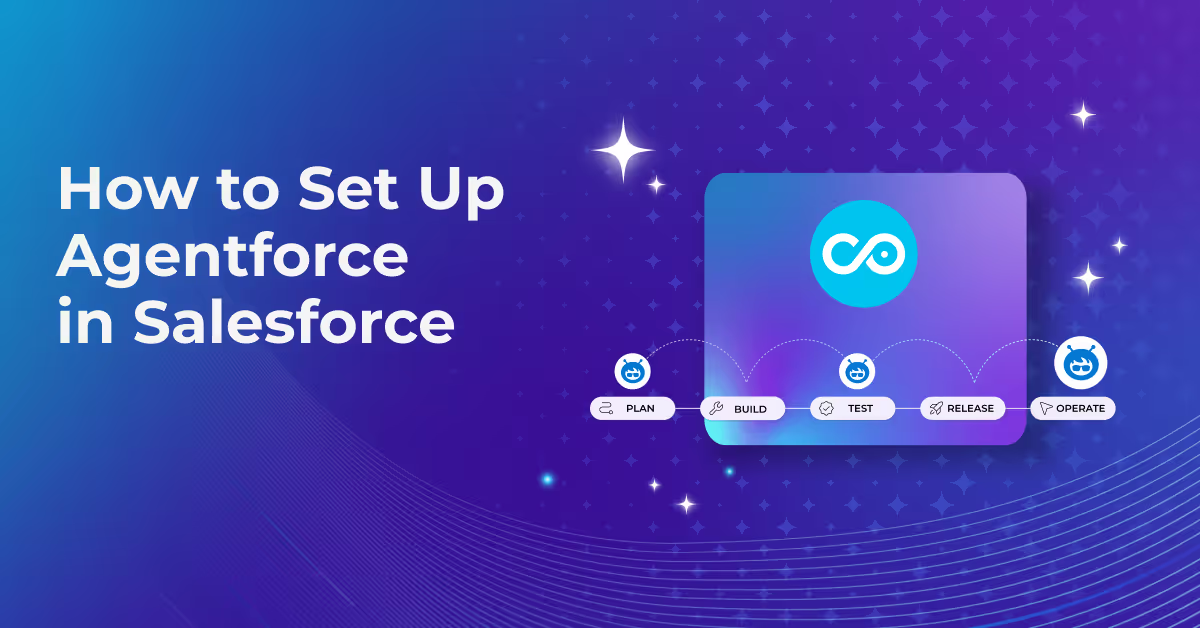
Get Started with Agentforce in Salesforce
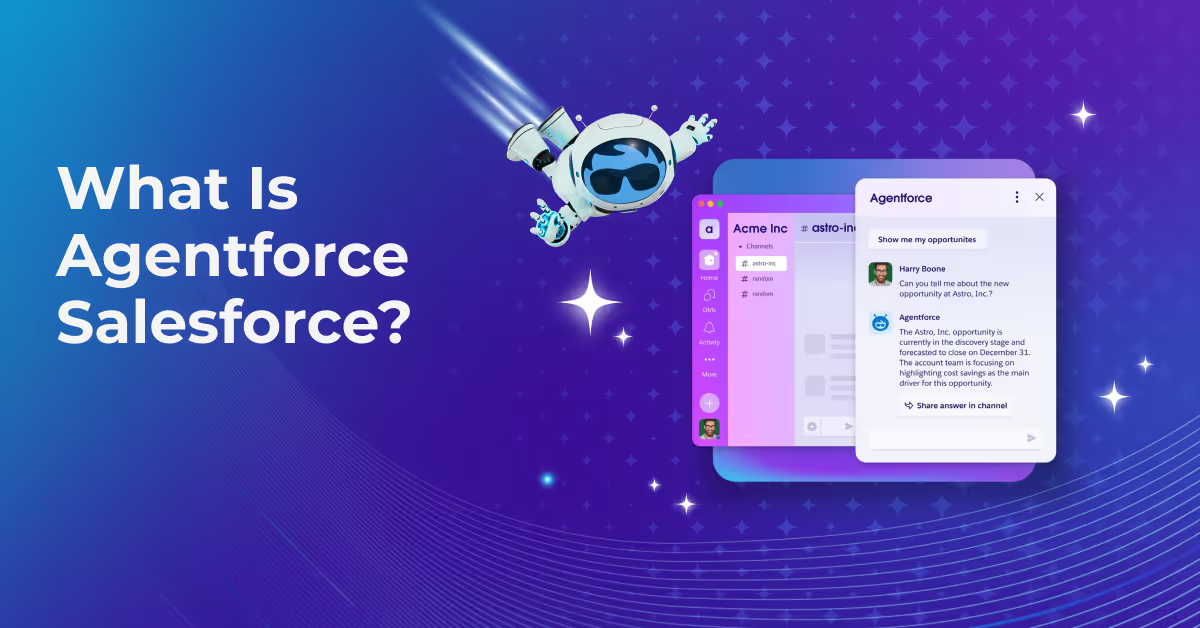
What Is Agentforce Salesforce?
Will AI Replace DevOps Jobs?
How to Use AI in DevOps
Agentic AI DevOps Explained
乐播传媒app最新版本 Introduces 础驳别苍迟颈补鈩, Bringing Context-Aware AI Agents to Salesforce DevOps
How Does Salesforce Agentforce Work
Agentforce vs Einstein: Choosing the Right AI to Move from Insight to Action
Agentforce Developer Guide
DevOps Pipeline Best Practices
DevSecOps vs. DevOps
DevOps vs. Agile
Generative AI in DevOps
How DevOps Teams Use AI to Win
Using AI in DevOps
Agentic AI in DevOps: Automation 乐播传媒app最新版本 for Teams
乐播传媒app最新版本 Awarded on CarahSoft鈥檚 GSA Schedule, Expanding Access for Federal Agencies
Salesforce Agentforce AI Capabilities and 乐播传媒app最新版本
Salesforce AI Agent Software Features for DevOps Teams
乐播传媒app最新版本 Renews FedRAMP Authorization and Advances Toward IL5 to Support U.S. Military Organizations
乐播传媒app最新版本 Appoints Rajit Joseph as Chief Product Officer to Accelerate AI-Driven Customer Success and Product Innovation
乐播传媒app最新版本 Recognized in Salesforce 2025 Partner Innovation Awards
乐播传媒app最新版本 Appoints Gaurav Kheterpal as Chief Evangelist to Accelerate Global DevOps Community Growth
乐播传媒app最新版本 CI/CD & Robotic Testing Now TX-RAMP Certified for Texas Government
Org Intelligence: Why Context Matters So Much in Salesforce DevOps Tools
Hubbl Technologies and 乐播传媒app最新版本 Forge Strategic Alliance to Power AI-Driven DevOps with Deep SaaS Context
From Chaos to Control: Why Public Sector Teams Are Moving Beyond Manual Pipelines
乐播传媒app最新版本 Hosts India's Flagship DevOps Conference in Response to Overwhelming Demand
What Does 鈥淥rg Intelligence鈥 Really Mean for Salesforce Teams?
乐播传媒app最新版本 Launches Org Intelligence to Provide End-to-End Visibility into Salesforce Environments
Why Pipeline Visibility Is Key to Successful Salesforce DevOps Transformation
乐播传媒app最新版本 Robotic Testing Now in AWS Marketplace, AI-Powered Salesforce Test Automation at Scale
Navigating User Acceptance Testing on Salesforce: Challenges, Best Practices and Strategy
Navigating Salesforce Data Cloud: DevOps Challenges and 乐播传媒app最新版本 for Salesforce Developers
Chapter 8: Salesforce Testing Strategy
Beyond the Agentforce Testing Center
How to Deploy Agentforce: A Step-by-Step Guide
How AI Agents Are Transforming Salesforce Revenue Cloud
The Hidden Costs of Building Your Own Salesforce DevOps Solution
Chapter 7 - Talk (Test) Data to Me
乐播传媒app最新版本 Announces DevOps Automation Agent on Salesforce AgentExchange
CPQ and Revenue Cloud Deployment: A DevOps Approach
乐播传媒app最新版本 Launches AI-Powered DevOps Agents on Slack Marketplace
Redefining the Future of DevOps: Salesforce鈥檚 Pioneering Ideas and Innovations
乐播传媒app最新版本 Announces DevOps Support for Salesforce Data Cloud, Accelerating AI-Powered Agent Development
AI-Powered Releasing for Salesforce DevOps
Top 3 Pain Points in DevOps 鈥 And How 乐播传媒app最新版本 AI Platform Solves Them
乐播传媒app最新版本 AI Platform: A New Era of Salesforce DevOps
乐播传媒app最新版本 Expands Its Operations in Japan with SunBridge Partners
Chapter 6: Test Case Design
Article: Making DevOps Easier and Faster with AI
Chapter 5: Automated Testing
Reimagining Salesforce Development with 乐播传媒app最新版本's AI-Powered Platform
Planning User Acceptance Testing (UAT): Tips and Tricks for a Smooth and Enjoyable UAT
What is DevOps for Business Applications
Testing End-to-End Salesforce Flows: Web and Mobile Applications
乐播传媒app最新版本 Integrates Powerful AI 乐播传媒app最新版本 into Its Community as It Surpasses the 100,000 Member Milestone
How to get non-technical users onboard with Salesforce UAT testing
DevOps Excellence within Salesforce Ecosystem
Best Practices for AI in Salesforce Testing
6 testing metrics that鈥檒l speed up your Salesforce release velocity (and how to track them)
Chapter 4: Manual Testing Overview
AI Driven Testing for Salesforce
Chapter 3: Testing Fun-damentals
AI-powered Planning for Salesforce Development
Salesforce Deployment: Avoid Common Pitfalls with AI-Powered Release Management
Exploring DevOps for Different Types of Salesforce Clouds
乐播传媒app最新版本 Launches Suite of AI Agents to Transform Business Application Delivery
What鈥檚 Special About Testing Salesforce? - Chapter 2
Why Test Salesforce? - Chapter 1
Continuous Integration for Salesforce Development
Comparing Top AI Testing Tools for Salesforce
Avoid Deployment Conflicts with 乐播传媒app最新版本鈥檚 Selective Commit Feature: A New Way to Handle Overlapping Changes
From Learner to Leader: Journey to 乐播传媒app最新版本 Champion of the Year
The Future of Salesforce DevOps: Leveraging AI for Efficient Conflict Management
A Guide to Using AI for Salesforce Development Issues
How To Sync Salesforce Environments | 乐播传媒app最新版本
乐播传媒app最新版本 and Wipro Team Up to Transform Salesforce DevOps
DevOps Needs for Operations in China: Salesforce on Alibaba Cloud
What is Salesforce Deployment Automation? How to Use Salesforce Automation Tools
Maximizing 乐播传媒app最新版本's Cooperation with Essential Salesforce Instruments
From Chaos to Clarity: Managing Salesforce Environment Merges and Consolidations
Future Trends in Salesforce DevOps: What Architects Need to Know
Enhancing Customer Service with 乐播传媒app最新版本GPT Technology
What is Efficient Low Code Deployment?
乐播传媒app最新版本 Launches Test Copilot to Deliver AI-powered Rapid Test Creation
Cloud-Native Testing Automation: A Comprehensive Guide
A Guide to Effective Change Management in Salesforce for DevOps Teams
Building a Scalable Governance Framework for Sustainable Value
乐播传媒app最新版本 Launches 乐播传媒app最新版本 Explorer to Simplify and Streamline Testing on Salesforce
Exploring Top Cloud Automation Testing Tools
Master Salesforce DevOps with 乐播传媒app最新版本 Robotic Testing
Exploratory Testing vs. Automated Testing: Finding the Right Balance
A Guide to Salesforce Source Control | 乐播传媒app最新版本
A Guide to DevOps Branching Strategies
Family Time vs. Mobile App Release Days: Can Test Automation Help Us Have Both?
How to Resolve Salesforce Merge Conflicts | 乐播传媒app最新版本
Go back to resources
There is no previous posts
Go back to resources
There is no next posts

Explore more about

No items found.
Articles
June 5, 2026
Data 360 Is the Operational Backbone of Agentforce 鈥 But Most Enterprises Are Not Ready to Deploy It Safely
Articles
May 12, 2026
Accelerating the Agentic Era in Brazil: 乐播传媒app最新版本 and Capgemini Deepen Strategic Partnership
Articles
May 8, 2026
Salesforce Source Format vs Metadata Format
Articles
May 7, 2026
Get Started with Agentforce in Salesforce

Activate AI 鈥 Accelerate DevOps

Release Faster, Eliminate Risk, and Enjoy Your Work.
Try 乐播传媒app最新版本 Devops.

Resources

Explore our DevOps resource library. Level up your Salesforce DevOps skills today.

Upcoming Events & Webinars

E-Books and Whitepapers

Support and Documentation

Demo Library