乐播传媒app最新版本

Articles
9/27/2022
10 minutes

Cloud Native Integration Challenges and 乐播传媒app最新版本

Table of contents

A software application used to be like an island: a mostly self-contained service that ran on independent machines with few external dependencies. Businesses might use a dozen or so of these self-contained applications, but the level of integration with data systems and outside services was minimal. According to a recent survey by Mulesoft and Deloitte, modern enterprises, on the other hand, use an average of 976 applications. And each of these applications may include hundreds of integrations for data processing, inter-app communication, and additional features and functionality.

In addition, many organizations are developing and utilizing cloud native technologies, which tend to use newer architectures (such as serverless infrastructure) and decentralized deployments (such as container-based microservices). These cloud native technologies must work seamlessly with legacy, on-premises, and private cloud data and applications. However, this need creates additional integration challenges.

This blog post will explain how to overcome cloud native integration challenges and the benefits of using a cloud native integration platform.

Cloud Native Integration Challenges

Cloud native deployments often include newer cloud-based technologies like serverless architectures, container-based microservices applications, and Platforms as a Service (PaaS). Many organizations need these technologies to seamlessly integrate with legacy and on-premises resources and traditional cloud and SaaS platforms.

Older integration frameworks for monolith applications generally aren鈥檛 designed to deal with the volume of integration points and events involved in microservice application integrations. Even older cloud-based Integration Platform as a Service (IPaaS) solutions struggle with hybrid cloud native deployments. These difficulties are because they鈥檙e designed to handle simple plug-and-play integrations between compatible SaaS applications.

What is a Cloud Native Integration Platform?

A cloud native integration platform is a Hybrid Integration Platform (HIP) or Integration Platform as a Service (IPaaS). That means it鈥檚 a system framework for developing and managing integrations between applications, processes, data, and services.

Some examples of the functionality included in a cloud native integration platform:

A cloud native integration platform is designed to build and manage integrations with containerized, microservice applications. In addition, these platforms typically support legacy and on-premises integrations, providing a unified solution from which to manage all integration flows.

As the name suggests, a cloud native integration platform is hosted in the cloud and usually deployed as a containerized application. This characteristic means the platform benefits from the increased performance and scalability of cloud native applications.

The Benefits of a Cloud Native Integration Platform

A cloud native integration platform delivers the following benefits:

Accelerating Cloud Adoption. Use modern cloud services and technologies while maintaining seamless integrations with legacy and on-premises resources. This feature allows you to accelerate cloud adoption initiatives without worrying about breaking legacy connections.

Dynamic Scaling. With a cloud native integration platform, you can easily add or remove endpoints and integrations as business needs change or customer demand fluctuates.

Facilitating Business Innovation. A cloud native integration platform provides quick integration of the cutting-edge and best-in-breed technologies needed to stay competitive.

Supporting Flexible Deployments. Depending on your speed, security, and data privacy requirements, you can deploy integration technologies in public or private clouds.

Microservice Application Integration. A cloud native integration platform can be deployed on top of a service mesh to act as an API gateway for microservice application integrations. Some integration platforms even include service mesh functionality.

Overcoming Integration Challenges with a Cloud Native Integration Platform

Some organizations choose to develop their own cloud native integration platform. Doing so may save you some money in subscription costs, giving you more control over your infrastructure and integrations, which simplifies data privacy compliance.听

Conversely, building a bespoke solution takes longer than implementing an on-the-shelf platform (assuming your team has the knowledge and training required to tackle the task). Plus, you鈥檒l be responsible for the ongoing maintenance and support of the integration platform.听

Working with cloud native integration experts, like the team at 乐播传媒app最新版本 Strategic Services, is often a great middle ground between doing everything yourself and buying something off the shelf.

Book a demo

About The Author

#1 DevOps Platform for Salesforce

We Build Unstoppable Teams By Equipping DevOps Professionals With The Platform, Tools And Training They Need To Make Release Days Obsolete. Work Smarter, Not Longer.

Data 360 Is the Operational Backbone of Agentforce 鈥 But Most Enterprises Are Not Ready to Deploy It Safely
Accelerating the Agentic Era in Brazil: 乐播传媒app最新版本 and Capgemini Deepen Strategic Partnership
Salesforce Source Format vs Metadata Format
Get Started with Agentforce in Salesforce
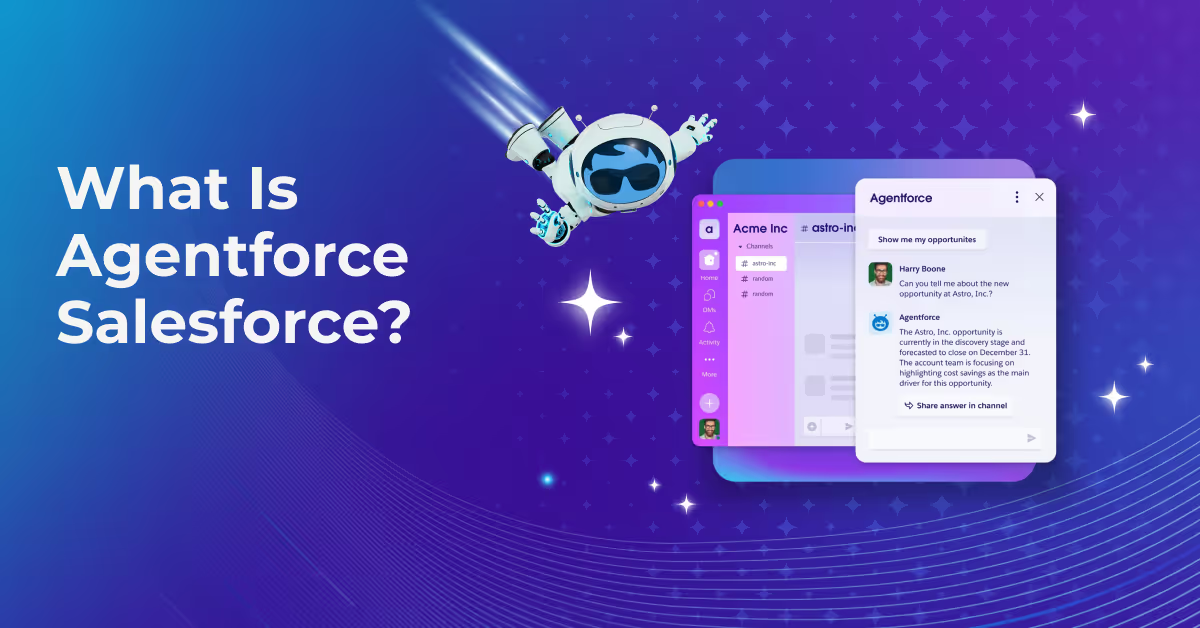
What Is Agentforce Salesforce?
Will AI Replace DevOps Jobs?
How to Use AI in DevOps
Agentic AI DevOps Explained
乐播传媒app最新版本 Introduces 础驳别苍迟颈补鈩, Bringing Context-Aware AI Agents to Salesforce DevOps
How Does Salesforce Agentforce Work
Agentforce vs Einstein: Choosing the Right AI to Move from Insight to Action
Agentforce Developer Guide
DevOps Pipeline Best Practices
DevSecOps vs. DevOps
DevOps vs. Agile
Generative AI in DevOps
How DevOps Teams Use AI to Win
Using AI in DevOps
Agentic AI in DevOps: Automation 乐播传媒app最新版本 for Teams
乐播传媒app最新版本 Awarded on CarahSoft鈥檚 GSA Schedule, Expanding Access for Federal Agencies
Salesforce Agentforce AI Capabilities and 乐播传媒app最新版本
Salesforce AI Agent Software Features for DevOps Teams
乐播传媒app最新版本 Renews FedRAMP Authorization and Advances Toward IL5 to Support U.S. Military Organizations
乐播传媒app最新版本 Appoints Rajit Joseph as Chief Product Officer to Accelerate AI-Driven Customer Success and Product Innovation
乐播传媒app最新版本 Recognized in Salesforce 2025 Partner Innovation Awards
乐播传媒app最新版本 Appoints Gaurav Kheterpal as Chief Evangelist to Accelerate Global DevOps Community Growth
乐播传媒app最新版本 CI/CD & Robotic Testing Now TX-RAMP Certified for Texas Government
Org Intelligence: Why Context Matters So Much in Salesforce DevOps Tools
Hubbl Technologies and 乐播传媒app最新版本 Forge Strategic Alliance to Power AI-Driven DevOps with Deep SaaS Context
From Chaos to Control: Why Public Sector Teams Are Moving Beyond Manual Pipelines
乐播传媒app最新版本 Hosts India's Flagship DevOps Conference in Response to Overwhelming Demand
What Does 鈥淥rg Intelligence鈥 Really Mean for Salesforce Teams?
乐播传媒app最新版本 Launches Org Intelligence to Provide End-to-End Visibility into Salesforce Environments
Why Pipeline Visibility Is Key to Successful Salesforce DevOps Transformation
乐播传媒app最新版本 Robotic Testing Now in AWS Marketplace, AI-Powered Salesforce Test Automation at Scale
Navigating User Acceptance Testing on Salesforce: Challenges, Best Practices and Strategy
Navigating Salesforce Data Cloud: DevOps Challenges and 乐播传媒app最新版本 for Salesforce Developers
Chapter 8: Salesforce Testing Strategy
Beyond the Agentforce Testing Center
How to Deploy Agentforce: A Step-by-Step Guide
How AI Agents Are Transforming Salesforce Revenue Cloud
The Hidden Costs of Building Your Own Salesforce DevOps Solution
Chapter 7 - Talk (Test) Data to Me
乐播传媒app最新版本 Announces DevOps Automation Agent on Salesforce AgentExchange
CPQ and Revenue Cloud Deployment: A DevOps Approach
乐播传媒app最新版本 Launches AI-Powered DevOps Agents on Slack Marketplace
Redefining the Future of DevOps: Salesforce鈥檚 Pioneering Ideas and Innovations
乐播传媒app最新版本 Announces DevOps Support for Salesforce Data Cloud, Accelerating AI-Powered Agent Development
AI-Powered Releasing for Salesforce DevOps
Top 3 Pain Points in DevOps 鈥 And How 乐播传媒app最新版本 AI Platform Solves Them
乐播传媒app最新版本 AI Platform: A New Era of Salesforce DevOps
乐播传媒app最新版本 Expands Its Operations in Japan with SunBridge Partners
Chapter 6: Test Case Design
Article: Making DevOps Easier and Faster with AI
Chapter 5: Automated Testing
Reimagining Salesforce Development with 乐播传媒app最新版本's AI-Powered Platform
Planning User Acceptance Testing (UAT): Tips and Tricks for a Smooth and Enjoyable UAT
What is DevOps for Business Applications
Testing End-to-End Salesforce Flows: Web and Mobile Applications
乐播传媒app最新版本 Integrates Powerful AI 乐播传媒app最新版本 into Its Community as It Surpasses the 100,000 Member Milestone
How to get non-technical users onboard with Salesforce UAT testing
DevOps Excellence within Salesforce Ecosystem
Best Practices for AI in Salesforce Testing
6 testing metrics that鈥檒l speed up your Salesforce release velocity (and how to track them)
Chapter 4: Manual Testing Overview
AI Driven Testing for Salesforce
Chapter 3: Testing Fun-damentals
AI-powered Planning for Salesforce Development
Salesforce Deployment: Avoid Common Pitfalls with AI-Powered Release Management
Exploring DevOps for Different Types of Salesforce Clouds
乐播传媒app最新版本 Launches Suite of AI Agents to Transform Business Application Delivery
What鈥檚 Special About Testing Salesforce? - Chapter 2
Why Test Salesforce? - Chapter 1
Continuous Integration for Salesforce Development
Comparing Top AI Testing Tools for Salesforce
Avoid Deployment Conflicts with 乐播传媒app最新版本鈥檚 Selective Commit Feature: A New Way to Handle Overlapping Changes
From Learner to Leader: Journey to 乐播传媒app最新版本 Champion of the Year
The Future of Salesforce DevOps: Leveraging AI for Efficient Conflict Management
A Guide to Using AI for Salesforce Development Issues
How To Sync Salesforce Environments | 乐播传媒app最新版本
乐播传媒app最新版本 and Wipro Team Up to Transform Salesforce DevOps
DevOps Needs for Operations in China: Salesforce on Alibaba Cloud
What is Salesforce Deployment Automation? How to Use Salesforce Automation Tools
Maximizing 乐播传媒app最新版本's Cooperation with Essential Salesforce Instruments
From Chaos to Clarity: Managing Salesforce Environment Merges and Consolidations
Future Trends in Salesforce DevOps: What Architects Need to Know
Enhancing Customer Service with 乐播传媒app最新版本GPT Technology
What is Efficient Low Code Deployment?
乐播传媒app最新版本 Launches Test Copilot to Deliver AI-powered Rapid Test Creation
Cloud-Native Testing Automation: A Comprehensive Guide
A Guide to Effective Change Management in Salesforce for DevOps Teams
Building a Scalable Governance Framework for Sustainable Value
乐播传媒app最新版本 Launches 乐播传媒app最新版本 Explorer to Simplify and Streamline Testing on Salesforce
Exploring Top Cloud Automation Testing Tools
Master Salesforce DevOps with 乐播传媒app最新版本 Robotic Testing
Exploratory Testing vs. Automated Testing: Finding the Right Balance
A Guide to Salesforce Source Control | 乐播传媒app最新版本
A Guide to DevOps Branching Strategies
Family Time vs. Mobile App Release Days: Can Test Automation Help Us Have Both?
How to Resolve Salesforce Merge Conflicts | 乐播传媒app最新版本
Go back to resources
There is no previous posts
Go back to resources
There is no next posts

Explore more about

Agile Planning
Articles
June 5, 2026
Data 360 Is the Operational Backbone of Agentforce 鈥 But Most Enterprises Are Not Ready to Deploy It Safely
Articles
May 12, 2026
Accelerating the Agentic Era in Brazil: 乐播传媒app最新版本 and Capgemini Deepen Strategic Partnership
Articles
May 8, 2026
Salesforce Source Format vs Metadata Format
Articles
May 7, 2026
Get Started with Agentforce in Salesforce

Activate AI 鈥 Accelerate DevOps

Release Faster, Eliminate Risk, and Enjoy Your Work.
Try 乐播传媒app最新版本 Devops.

Resources

Explore our DevOps resource library. Level up your Salesforce DevOps skills today.

Upcoming Events & Webinars

E-Books and Whitepapers

Support and Documentation

Demo Library